A hospitality robot has a clear job when it moves items, cleans shared spaces, or answers routine questions without tying up a staff member. The business opportunity sits in that handoff: hotels and restaurants can spend money on machines when the task is repeated, easy to measure, and hard to staff at busy times.
Quick read
- Room delivery, floor cleaning, and food transport are the clearest starting points
- Revenue can come from robot sales, leasing, software, service, or integration
- A pilot needs a task, a cost target, and a plan for human handoffs
Where robots can earn their place
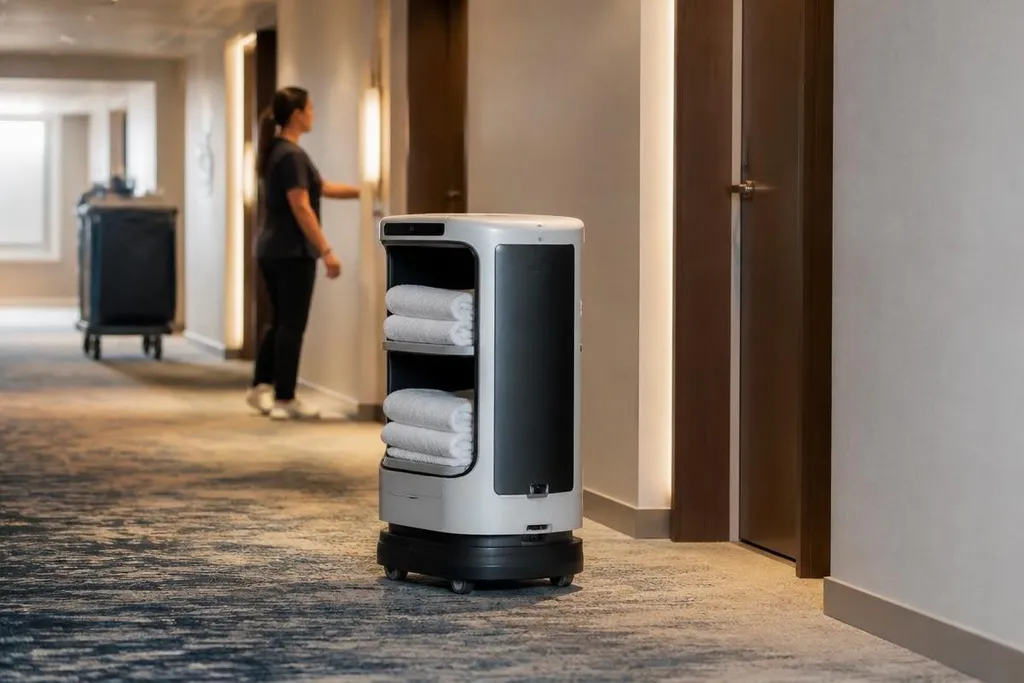
The first opportunity is task automation inside hotels. A delivery robot can carry towels, toiletries, or meals from a service area to a guest floor. A cleaning robot can cover corridors or other open floor areas. A restaurant robot can move trays, dishes, or ingredients along a set route.
Each job has a measurable output. Count deliveries per shift, floor area cleaned, trips completed, or minutes of staff time freed. Those measures give an operator a way to compare the robot with its purchase or lease cost, charging needs, repairs, and the time required to watch over it.
Guest-facing work creates a different opening. A robot may guide visitors to a room, carry bags through a lobby, or answer a short set of common questions. The task works best when the robot handles the first step and a person takes over when the request needs judgment, language skill, or access to private information.
That handoff matters. A machine that sends every unusual request to the front desk may move work around instead of reducing it.
How companies can sell the service
Robot makers have several ways to earn revenue from hospitality. A hotel may buy the machine outright, lease it for a fixed term, or pay a recurring fee tied to use. Each model changes who carries the cost of repairs, software updates, charging equipment, and staff training.
A second business sits around the robot. Hotels may need route maps, elevator access, door controls, network setup, safety checks, and links to their property management system. A company that handles those jobs can earn from installation and later service without building the robot itself.
Software can add another income stream when it controls task schedules, maps, fleet status, or remote help. The software must show a clear result, such as fewer missed deliveries or less time spent checking machines. A dashboard full of colored charts won't fix a robot that stops at a closed door.
The business case for a hotel robot depends on where it works after the demo. Elevators, room doors, guest traffic, and staff handoffs can decide whether a paid task holds up. Dated hospitality robot reporting can place those site details beside the robot’s price and service terms before the next section looks at the limits that shape the deal.
The limits that shape the deal
Hotels are difficult places for machines because the floor plan changes, guests block routes, elevators need access, and staff work across the robot's path. A machine built for a quiet corridor may struggle in a crowded lobby or during a conference changeover.
Cleaning robots also need a clear boundary. Open floors suit autonomous movement better than stairways, cluttered rooms, wet surfaces, or spaces that change every hour. Food and room delivery brings its own issues, including secure storage, guest privacy, lift access, and the need to reach a person at the right door.
The unproven part is often the work around the robot. A sales pitch may show the machine carrying a load between the kitchen and a guest room.
The hotel also needs to load it, call the lift, handle blocked routes, clean its sensors, and recover from a failed trip. Those steps decide the labor cost.
I’d start with one repeat task in one part of a property, then expand only when the records show that the machine saves more staff time than it consumes.
A practical buying checklist
Use these checks before a hotel signs a robot deal:
- Name the task. Write down the item moved, distance covered, working hours, and person who takes over when the route fails.
- Count the full cost. Include the robot, lease or finance charge, installation, charging, network work, service, training, and lost time during faults.
- Set a measured target. Choose a number such as deliveries per shift, minutes saved per delivery, or floor area cleaned per hour.
- Test the building. Check doors, elevators, ramps, floor changes, guest traffic, Wi-Fi coverage, and places where a person may block the route.
- Plan for failure. Name the staff member who responds, the time allowed for recovery, and the process for a missed delivery.
- Review the guest effect. Check noise, privacy, access for disabled guests, and the points where a person must remain available.
Those checks also help robot makers choose the right market. A company selling hardware may find more stable income by adding service, site setup, or software that keeps the machine working after installation.
The next useful step is a small paid pilot with one task and a written cost target. If the hotel cannot show the result in its own records, the business case is still a claim, not a sale.